





Serving Roseburg and Douglas County

A Classical Christian Education from preschool through twelfth grade.

Classical Christian Education in Roseburg, Oregon.

Partnering with families in Roseburg, Oregon to provide a K–12 classical Christian education rooted in faith, strong academics, and character.

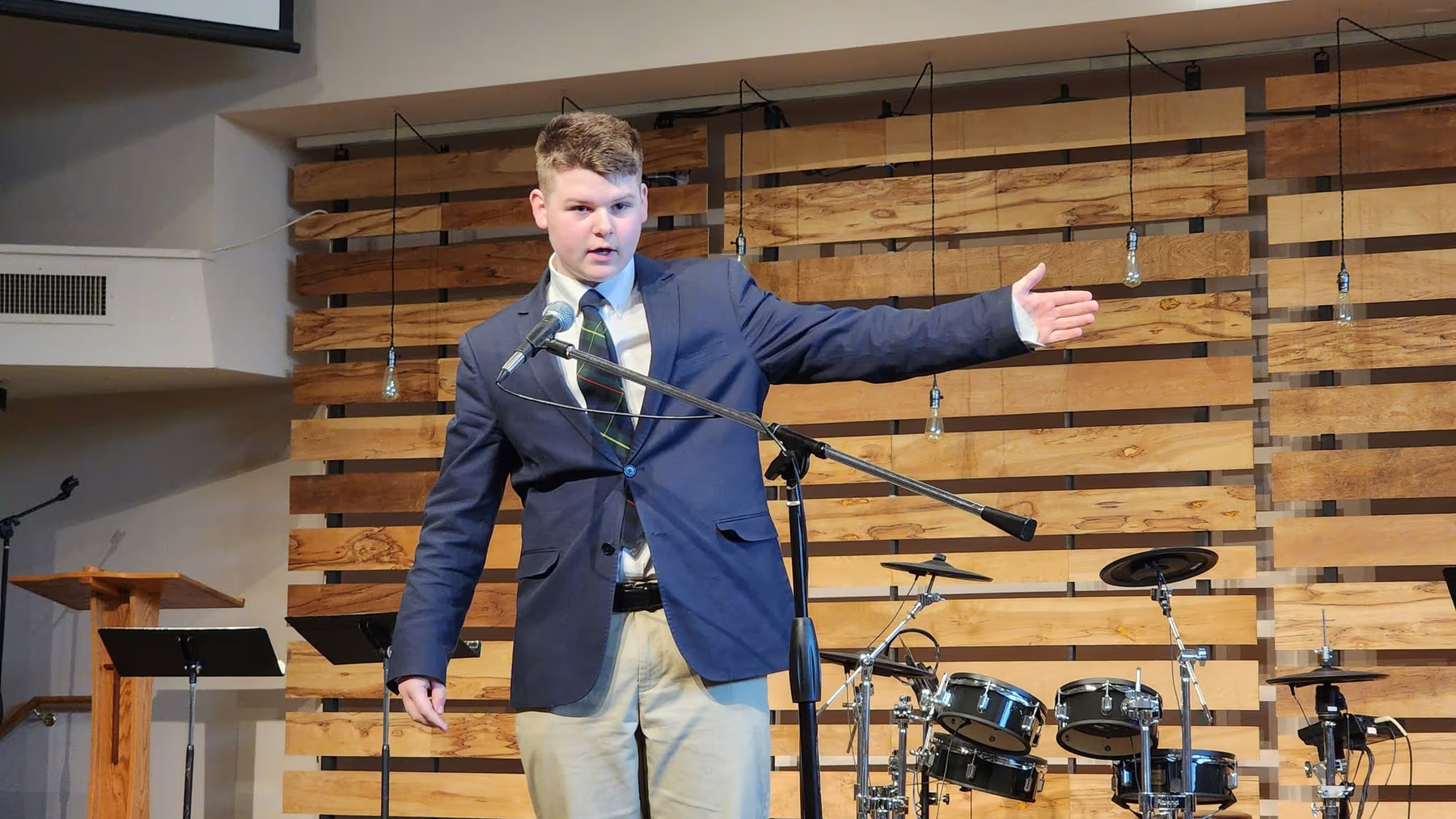
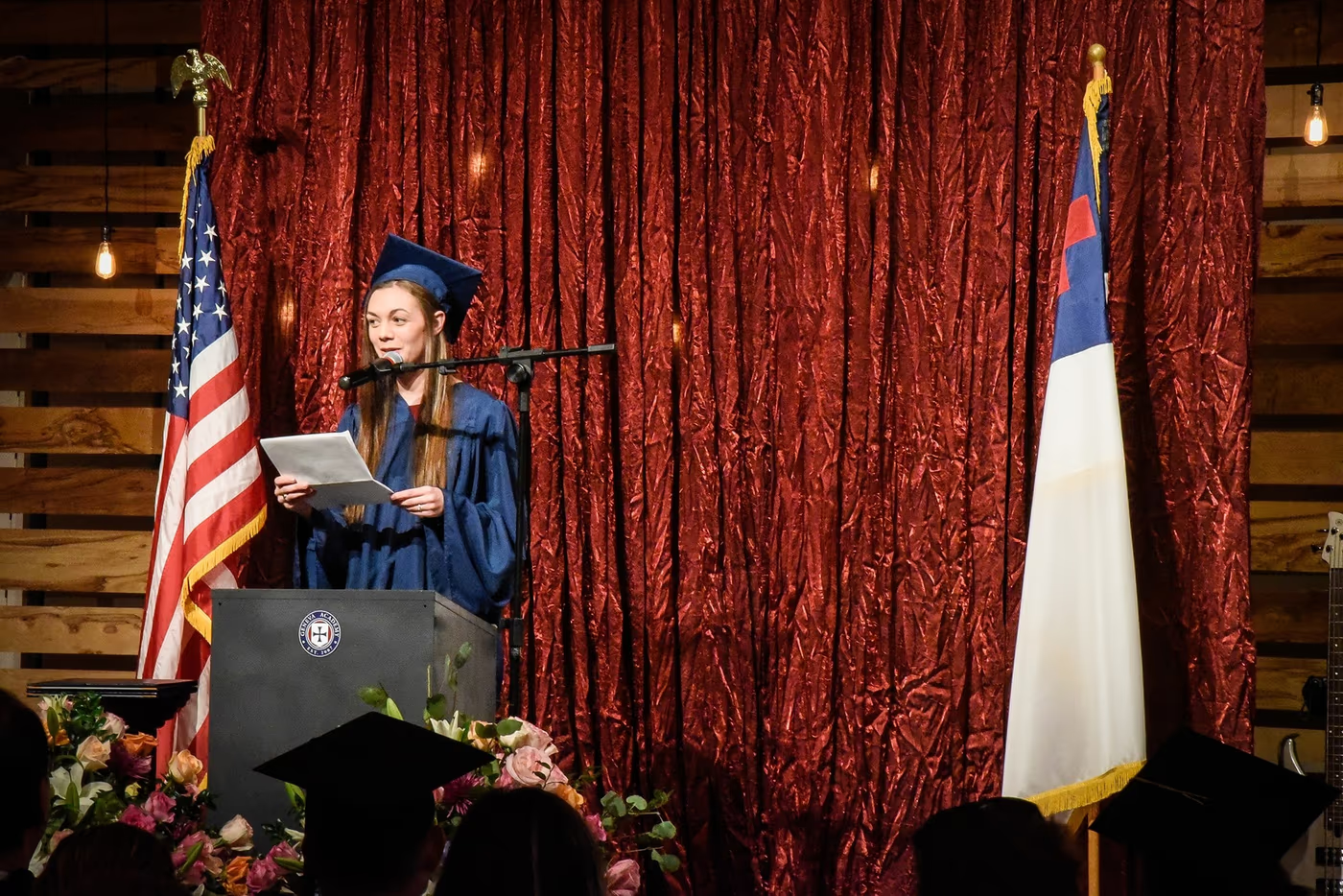
Geneva Academy student giving a speech in Roseburg, Oregon
From K3 to Graduation

A classical Christian education, K3 to senior thesis.

From a student’s first day in K3 to senior thesis, Geneva offers one continuous path through twelfth grade. Every year builds on the last, and every teacher knows where a student has been and where they’re going.

The result is a graduate who reads hard books, writes clear essays, defends true ideas, serves their neighbors, and worships the living God.

Explore Academics
Rooted in every subject.
Every Subject, Every Year

One classical Christian curriculum.

Bible, Latin, math, logic, rhetoric, science, literature, music, art, and physical education—every subject taught from a Christian worldview, K3 through twelfth grade.

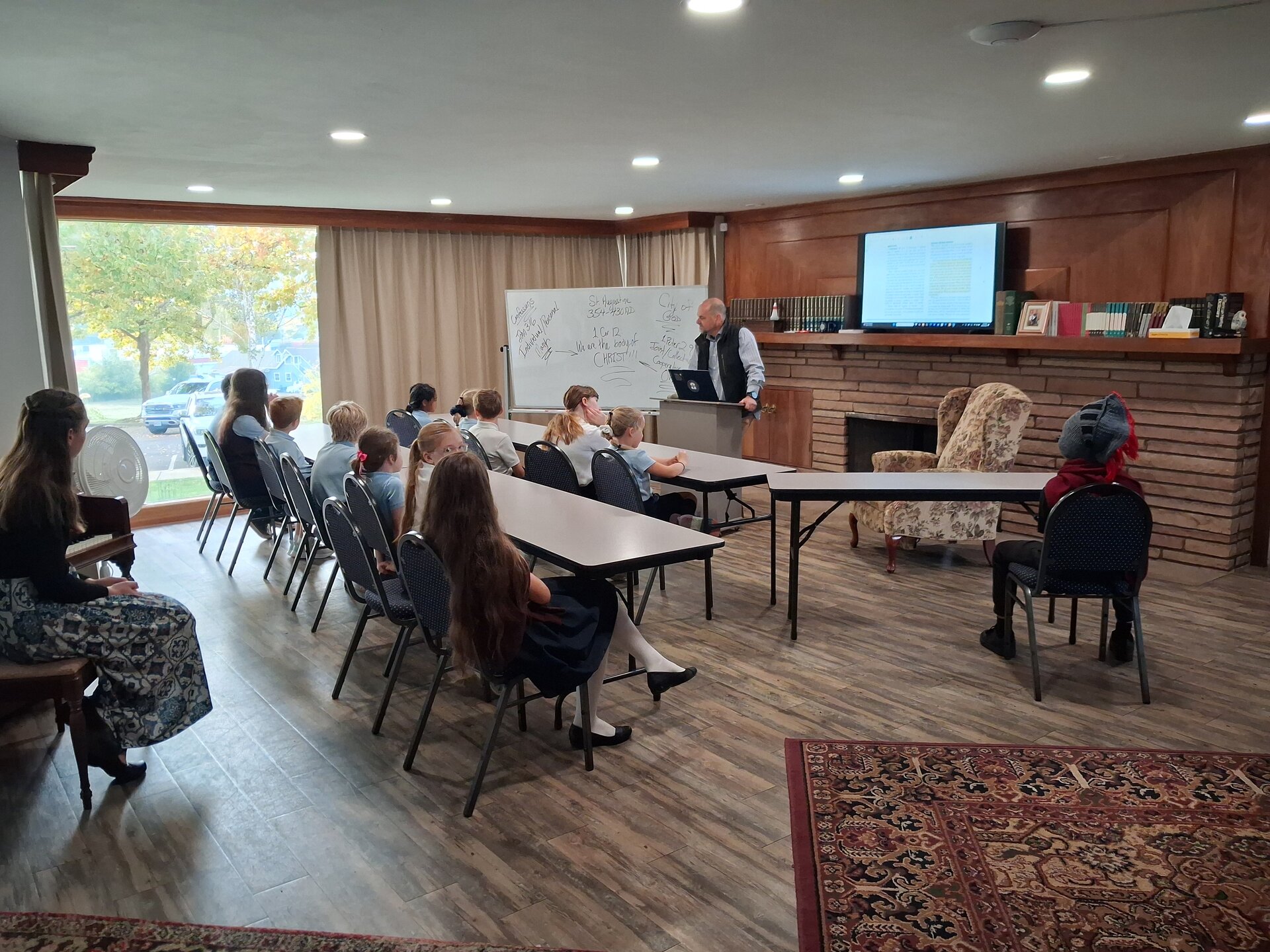
Classical Christian school student reading in Roseburg, Oregon

What separates a classical Christian school from any other.

What separates a classical Christian school from any other.

Twelve minutes that explain the philosophy behind every choice we make, from the books on our shelves to the prayers in our classrooms.

A short film · 11 min 42 sec

Side by side

Modern public education vs. classical Christian education.

Every school makes a thousand small choices about how it forms a child. Here is how we differ, line by line.

Most modern public education is…
Classical Christian education is…

Workforce‑oriented

Schools must impart job skills of value to particular industries. This early “job training” may not apply to other industries and often ignores reasoning and other higher‑level skills.

Critical‑thinking‑oriented

The emphasis is on reasoning skills, wisdom, and training the mind. These are broad skills that can be used in higher education, the workplace, and the home.

Hostile to traditional Christianity

There is little toleration for orthodox Christian teachings or claims to truth.

Founded on traditional Christianity

Classical Christian education begins with the assumption that God has revealed truth in the Scriptures and that the Bible is an infallible authority.

Morally relative

All moral positions are equally valid, though some may be more risky. There are no moral absolutes; what is true for you may not be true for me.

Morally stable

There are Biblical standards of right and wrong, good and evil, that children must learn and come to value.

Textbook‑based

Information given to students is filtered through textbooks written to comply with politically correct standards. Interpretations are handed to students.

Primary‑text‑based

Students are taught how to read original authors’ works and to interpret primary sources for themselves based on their own study of history, literature, theology, and language.

Fractured

Knowledge is dis‑integrated, broken into separate subjects that rarely relate to one another.

Integrated

Knowledge is unified and crosses subject boundaries. Students learn the big picture as well as the details.

Given to fads

There are continual cycles of “education reform” in efforts to find best practices. New methods, tests, and materials are frequently rolled out in search of something more effective.

Given to proven methods

Songs and chants for younger students; Socratic dialogue, debate, and speeches for older students. Methods that worked for centuries still work.

Low achieving

Oregon education statistics are very low, by the State’s own admission. A majority of public‑school students either do not graduate or graduate unprepared for college‑level work.

High achieving

CCE graduates score high on standardized testing, are admitted to highly competitive colleges, and graduate on time.

From the Headmaster

Six short conversations, everything a curious family wants to know.

Six short conversations, everything a curious family wants to know.
  1. Why Geneva, The Geneva Difference

  2. What is Classical Christian Education?

  3. How Much Does Geneva Cost?

  4. Does Geneva Have Sports?

  5. How Does Geneva Handle Controversial Topics?

  6. Geneva vs. Homeschool, Charter, & Other Options

We’re ready to partner with you

Begin your child’s journey at Geneva.

Begin your child’s journey at Geneva.

The admissions process begins with a conversation. Visit our campus, meet our teachers, and discover whether Geneva is the right home for your family.

Frequently Asked

The questions thoughtful families ask first.

Frequently asked questions
What is classical Christian education?
Classical Christian education combines the historic trivium (grammar, logic, and rhetoric) with the gospel of Christ. Students memorize and recite in the grammar years, learn to reason and argue in the logic years, and learn to speak and write with persuasion in the rhetoric years. Every subject, every text, and every conversation is read through Scripture.
What grades does Geneva Academy offer?
We educate students from K3 (age three) through twelfth grade on a single, unified Roseburg campus. Our six programs are K3, K4, Kindergarten, Grammar (1st through 6th), Logic (7th through 8th), and Rhetoric (9th through 12th).
How much does Geneva cost? Is tuition assistance available?
Tuition varies by grade. We publish current rates each January at the link on our Admissions page. Geneva has always offered tuition assistance to qualifying families, alongside discounts for employees and parents in full-time ministry. We can walk you through the numbers in a short visit.
What is the student-to-teacher ratio?
About 10:1 across the school. Our total enrollment is roughly 110 students, K3 through 12. Teachers know every name. Older students mentor younger ones. Families come to know each other well.
What is your statement of faith? Do families need to share it?
Geneva is broadly Reformed, but we welcome families from across the Protestant tradition who can affirm our Statement of Faith. Our families come from many local churches.
Do you have sports, arts, and other extracurriculars?
Yes. Geneva offers competitive athletics, choral and instrumental music, theater, speech meets, a robust house system, and field trips from kindergarten through senior year. The classical tradition takes beauty seriously, so the arts are part of the curriculum, not an afterthought.
What is the admissions process?
Five steps. Visit campus, dig into our materials, pray and apply, sit for a family interview, then receive a decision and enroll. The whole process typically takes a few weeks once you begin. See the full timeline.
How do I schedule a visit?
Call the school office at (541) 637-7500, email info@genevaroseburg.com, or use our online form. We welcome you whether you are early in your research or ready to apply.