Scripture, History & Letters
Close reading and argument across the Pauline Epistles and the Reformation, medieval history and literature, Economics I, and the apologetics and speech of Rhetoric.
Bible: Pauline Epistles
Students deepen their appreciation of scripture as Gods Word by extended and disciplined study of Pauline Epistles and dedicated study of the Reformation
Students will be able to demonstrate understanding of how the texts they study were used in medieval and reformation era debates about Paul and justification by faith, among other theological topics, through writing exercises of Encomium and Viturpation and oral exercises of the formal dialectical method.
Students will engage in sustained and disciplined inquiry into the life and work of the Apostle Paul by doing the following:
Debate different medieval and reformation interpretations of the biblical texts through writing exercises and oral exercises of formal dialectic
Become familiar with the way the Pauline Epistles were used in the life of the church, and see how this effects the reading and application of God’s Holy Word to all of life
Memorize sections of the prophets and recite or sing them as a class and individually
Apply biblical concepts learned in class to real world situations, so that they will be prepared to apply them to unpredictable situations later in life
Engage in a sustained inquiry into the interpretation of life and work of Paul, as seen in a research paper based in the class reading of a book on different interpretations of Paul and examination of his works from a rhetorical perspective
Extended inquiry into the history of reformation as seen in the works of Huss, Wycliffe, Luther, Calvin and Cranmer seen as an attempt to recapture the church’s Pauline spirituality
Pray these scriptures through the adoption of a habitual practice of morning and evening prayer, modeled on Lectio Divina
The student will academically study the same passages they pray, so that God’s Spirit will form both the head and the heart for lifelong love of God’s Word.
Medieval History
Students will gain an appreciation for the cultural and material life of medieval civilization, from the time of the Julio-Claudian Dynasty to the advent of the Reformation with specific attention given to the Carolingian renaissance and the rise and decline of the Holy Roman Empire and the Crusades
Students will engage in sustained and disciplined inquiry into medieval civilization by doing the following:
Debate different historical interpretations of events such as the Crusades through writing exercises of Encomium and Viturpation and oral exercises of formal dialectic
Find events in the text on geographical maps, and observing the change of maps over time
Locate events in the text on a timeline and memorization of Geneva Academy timeline for class
Apply insights from historical research to real world, so they will be prepared to apply them to unpredictable events in life
Students will spend extended time developing close reading skills in primary source historical material including but not limited to:
The City of God, by Augustine
Selections about the Crusades
Selections from St. Thomas Aquinas, or Assisi and Aquinas by G.K. Chesterton
The Prince by Machiavelli
Chronicle of the Kings of England, by William of Malmesbury
Lives of Thomas Beckett, by Michael Staunton
The Travels of Marco Polo
An extended unit on reformation history including selections from The Westminster Confession of Faith, Schleitheim Confession, works of Calvin, Luther, the 39 Articles, Augsburg Confession and Synod of Dordt
Teacher will draw primarily from Susan Wise Bauer’s The History of the Medieval World and History of the Renaissance World for age-appropriate activities deepening the students understanding of the history of the time leading up to the birth of the Modern world
Medieval Literature & Composition
Students will gain an appreciation for the literature of medieval civilization from theJulio-Claudian Dynasty to the time of the Reformation with specific attention given to the literature of medieval Europe, including England.
Students will engage in sustained and disciplined inquiry into the literature of medieval civilizations by doing the following:
Debate different historical interpretations through writing exercises of Encomium and Viturpation and oral exercises of formal dialectic
Locate literary events on an historical timeline and memorization of Geneva Academy timeline for the class
Use experience to interpret texts and apply insights from literature to the real world, so they will be prepared to apply them to unpredictable events later in life
Become familiar with the writing/editing process through weekly rough draft revision in peer editing sessions and teacher corrections
imitate good writing at the sentence, paragraph and essay level, separating form from content and adapting the form to new content from the student’s own experience
develop extensive vocabulary and copious writing skills through the use of Erasmus’ writing exercises, and weekly vocabulary games taken from the readings
Memorization of poetry
Students will cultivate close reading skills by reading and debating the interpretation of great works of literature in the primary source, including but not limited to the following:
Selections from City of God, by St. Augustine
Marriage of Philology and Mercury by Martianus Minneus Felix Capella
Consolation of Philosophy, by Boethius
Works by Aquinas, medieval dialogues and disputations
The Divine Comedy, by Dante
Selections from Canterbury Tales, by Chaucer
Don Quixote, by Cervantes
Shakespearean tragedies or historical plays
Selections from The Fairie Queen, by Spencer
Introduction to English poetry with selections from Cooper, Woodsworth, Donne and others
The teacher will also draw from European Literature and the Latin Middle Ages, by Ernest Robert Curtius and other resources.
Economics I: Introduction to Micro & Macro Economics
Students in this class will examine the nation’s basic economic structure, giving sustained and disciplined inquiry into the following topics:
Supply, Demand, and Equilibrium
Elasticity and Its Applications
Taxes and Subsidies
The Price System
Price Ceilings and Price Floors
Trade
Externalities
Costs and Profit Maximization Under Competition
Competition and the Invisible Hand
Monopoly
Price Discrimination
Labor Markets
Public Goods and the Tragedy of the Commons
Asymmetric Information
Consumer Choice
Successful students will be able to articulate the relationship between economic systems, models, political choices and various worldviews or philosophies and a biblical view of stewardship. They will also be able to describe Judeo-Christian teaching on economics in the family and community context, including debt, charity, wealth, money, investment, character, employer-employee relationships, the church and the marketplace.
Students will engage in a sustained and disciplined inquiry into the following primary sources about economics including by not limited to:
I, Pencil by Leonard Read
Selections from
Economic Sophisms, by Frederick Bastiat
Selections from Wealth of Nations, by Adam Smith
Selections from The Communist Manifesto, by Marx and Engels
Selections from The General Theory of Employment, Interest and Money by Keynes
Rhetoric: Apologetics & Speech
Students will learn the basic format and techniques of formal and informal argumentation, with attention given to apologetical examples. Selections will be taken from but not limited to the following:
The Luther-Erasmus debate about predestination and free will
The Ham-Nye debate on science and origins
The Harris-Wilson “Letter to A Christian Nation” debate
The Hitchens – Wilson “God is not Great” debate
The debate surrounding Christian exclusivism as seen in Ravi Zacharias’ book Jesus Among the Other Gods
Others as they become evident in our ongoing “Great Conversation”
The teacher will make selections for classroom reading and discussion from the following:
Mere Christianity, by CS Lewis
New Evidence that Demands a Verdict by Josh McDowell
The 10 Most Common Objections to Christianity, by Alex McFarland
Tactics: A Game Plan for Discussing your Christian Convictions, by Gregory Kould
A successful student in this class will be able to do the following:
Recall and apply the five canons of rhetoric and a proper understanding of ethos and pathos to their response to the problem of higher criticism of the bible as well as philosophical problems such as theodicy (or the problem of evil), naturalism and postmodernism
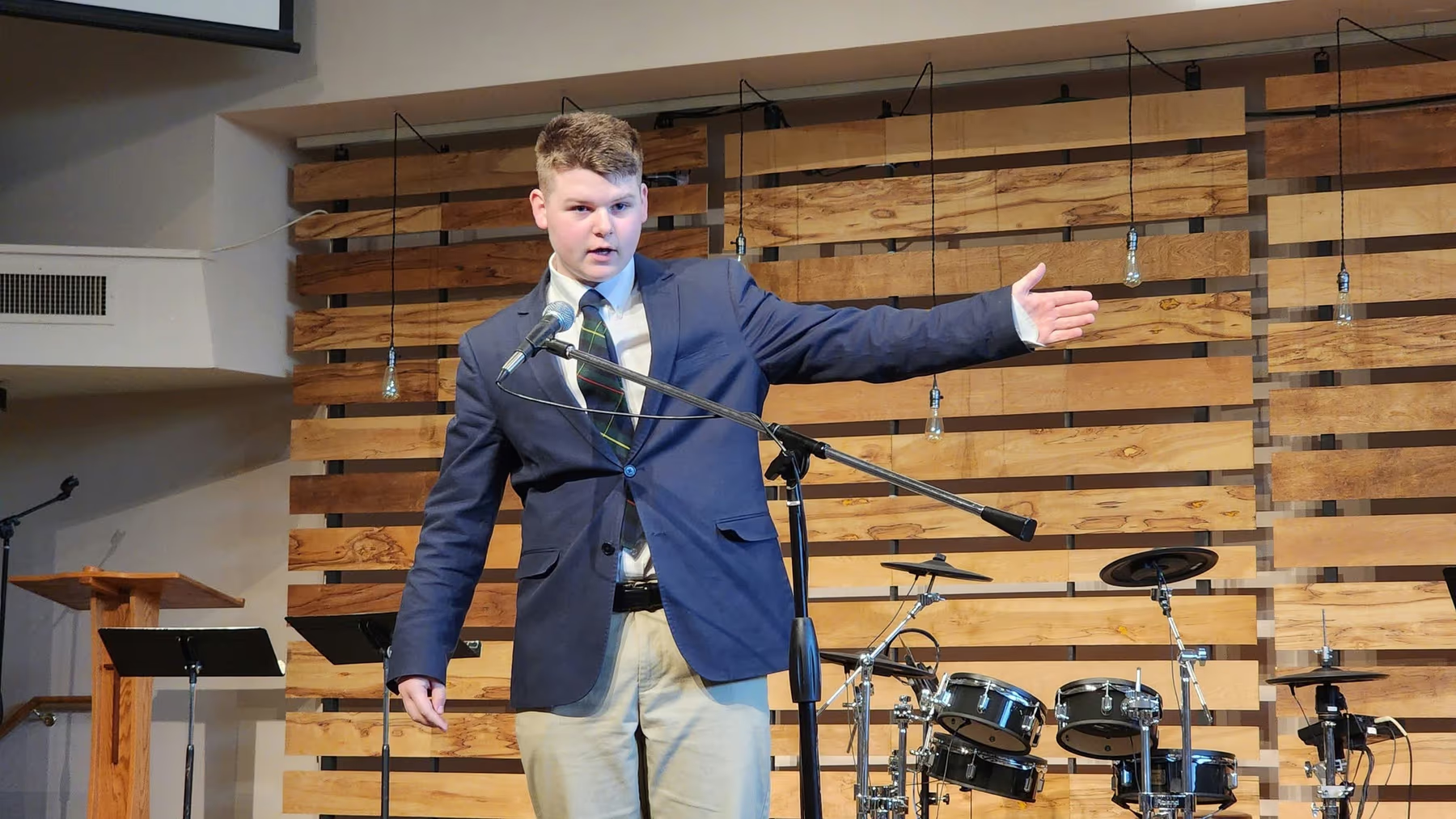
Properly cite research, compose, memorize and deliver a speech at the speech meet
Critically judge and evaluate the strengths and weaknesses of a debate
Demonstrate critical thinking and persuasive skills defending or adapting personal beliefs when challenged